Updated September 19, 2026.
When in Rome, do as the Romans do. And when in Mt. Rainier National Park, do whatever the rangers tell you—and stay on the path!! With this in mind, we consulted our go-to Mt. Rainier expert Terry Wildy for the original 2025 edition of this guide. Her advice about crowds, changing weather, and staying on the trail still makes a useful starting point.
Autumn can feel like the off-season, but a sunny weekend at Paradise tells another story. Timed-entry reservations are not required in 2026, and that does not mean parking will be easy. Plan ahead, arrive with a backup, and leave room in the day for entrance queues.
But keep those hiking boots on, friend. This guide will help you enjoy the best of the season at Mt. Rainier, offer tips to avoid crowds, and teach you to visit thoughtfully and safely (hint: you might encounter bears!).
Part I: Fall may be getting popular, but it’s still considered the off season.
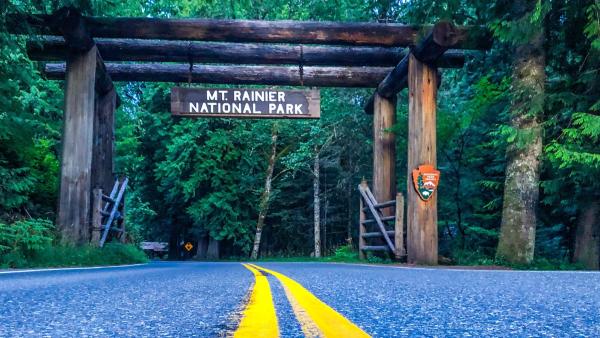
Mt. Rainier has a zealous visitor base during the summer and a bit more devoted crowd in the winter. Visitation in the fall is very weather-dependent, and more limited in activities. It’s too early for snowshoeing, but certain hiking paths and businesses may not be open with summer’s end. Check to make sure your destination is open and accessible this time of year!
Some considerations:
- No timed-entry reservation is required in 2026; entrance fees and any camping permits still apply.
- Snow can arrive in September. High-elevation roads and facilities close seasonally.
- Sunrise remains a summer destination, but its road is temporarily closed to vehicles because of fires as of September 19, 2026. Nearby trail closures also apply. Check current fire updates before planning a visit.
- Ohanapecosh Campground and its visitor facilities are temporarily closed for construction through November 2026. Check project updates for reopening information.
- The Fairfax Bridge closure blocks public road access from SR 165 to Carbon River and Mowich Lake; there is no alternate public road route.
- The Nisqually-to-Paradise route offers the usual winter approach, subject to weather and gate closures. Read the road report and facility hours before leaving.
- For a sunny fall forecast, try a weekday and have a second hike in mind.
Places to warm up around the mountain
These stops are worth keeping on your list, but restaurant and attraction schedules vary. Wildberry is seasonal; check its operating dates rather than counting on a winter meal. Confirm opening hours directly before making a special trip.
- National Park Inn and Restaurant
- Copper Creek Inn and Restaurant
- Elbe Market Country Store
- Mt. Rainier Railroad Dining Co.
- Whittaker’s Bunkhouse and Cafe
- Wildberry Restaurant
- Northwest Trek Wildlife Park and Cafe
Part II: Weather will happen. Be prepared!
Prepare Yourself
In addition to the typical 10 essentials, make sure you have some comfortable layers in case warm sunshine suddenly gives way to a chill; this time of year, weather changes on short notice.
Prepare Your Vehicle
As mentioned above, snow is a possibility as soon as September. Between November 1 and May 1, all vehicles in Mount Rainier National Park must carry tire chains, including four-wheel-drive vehicles. Read the park’s current road requirements and check the forecast before departing.
Part III: The ultimate autumn activity guide
Now that you’re informed, prepared, and packed, let’s get into the fun stuff.
Look down, not up, for autumn colors!
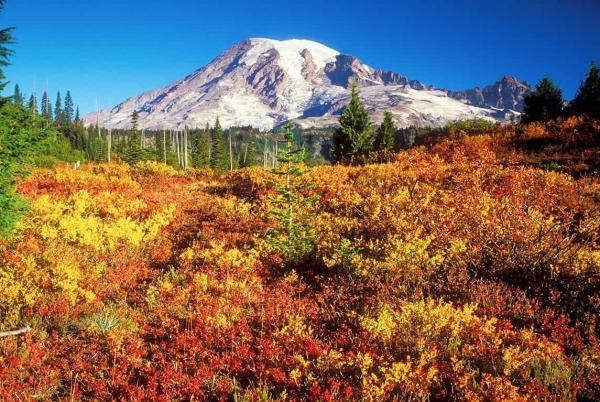
Many of the trees are evergreen and don’t change with the season, but vine maples, Sitka mountain ash, and huckleberry bushes all turn vibrant red and gold at high elevation. Though these stunning views are enticing, we implore you once again to stay on the path.
Terry Wildy puts it well. “We saw an abundance of inappropriate instagram posts and photos on all social media platforms that unfortunately seemed to encourage off trail selfies. We love to see folks out enjoying their public lands, but again our messaging is to stay on the trail.”
Hiking
On a clear day with open trails, Paradise has excellent fall hiking. Weekdays can be quieter, but neither parking nor snow-free conditions are guaranteed. A couple of our favorites:
-
Skyline Trail Loop is a strenuous hike with about 1,700 feet of elevation gain. In suitable conditions, it incorporates meadows, waterfalls, and of course, stunning views of the mountain all in a 5.5 mile loop.
-
Alta Vista Loop is a great option if you’re chasing the fall foliage more than the hike itself. At just 1.5 miles, this loop is painfully busy during the wildflower season, but could be your autumnal oasis on a Wednesday afternoon.
Wildy is enthusiastic for you: “Fall hiking can be very enjoyable; the days are shorter but the temperatures are cooler, and especially on weekdays there tend to be smaller crowds.”
Watch (out for!) the animals
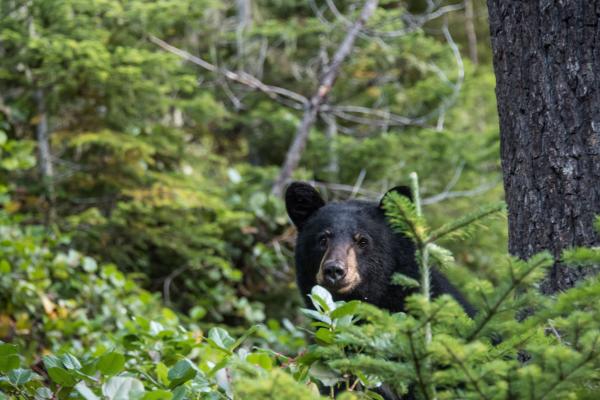
This time of year, black bear families are gobbling huckleberries to put on as much weight as possible before winter. Depending on your inclination, this could be a drawback or a plus. Give wildlife plenty of space, never approach a bear or get between a mother and her cubs, and follow the park’s wildlife guidance. Be prepared to wait or turn around if an animal occupies the trail.
“Sometimes folks have to wait patiently on the trail for an hour for a bear to move along to the next tasty huckleberry shrub,” explains Wildy. “Understand that bears always have the right of way on trails.”
You can learn more about wildlife safety here, including what to do if you encounter a mountain lion.
That’s it! Pack well, check conditions ahead of your arrival, and most importantly—say it with us!—STICK TO THE PATH. In fact, you have our express permission to send this article to anyone on social media posting from the middle of a Mt. Rainier meadow, regardless of the season.
Wildy wishes you well too. “Enjoy some of the best hiking weather and most beautiful scenery Mount Rainier National Park has to offer!”